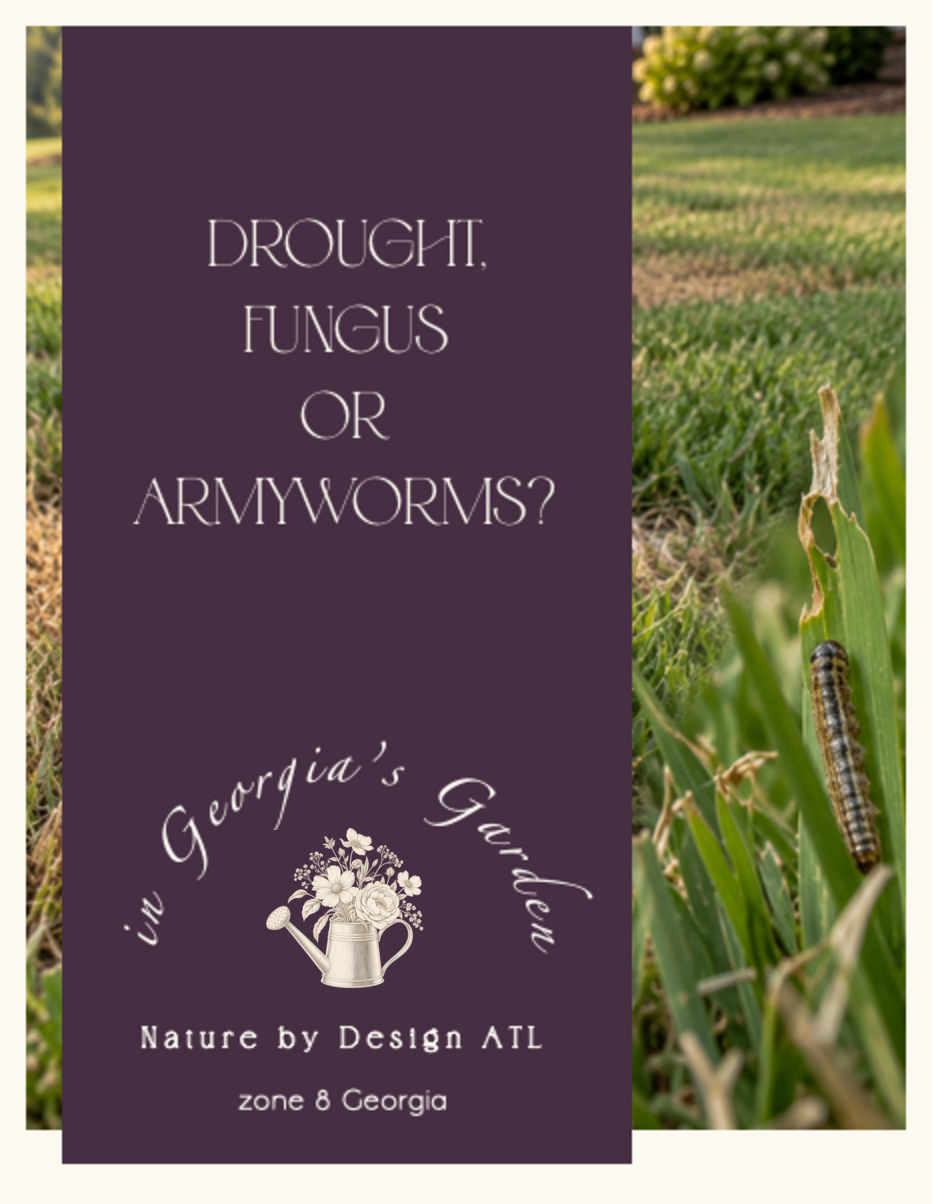
Brown patches can look similar from a distance, but the pattern, soil moisture, leaf damage, and speed of decline reveal very different problems.
A brown lawn does not automatically need more water—and it does not automatically need a fungicide. In Georgia, late-summer and early-fall turf can be showing drought stress, fungal disease, insect feeding, irrigation problems, or more than one issue at the same time.
Before treating anything, look closely at the pattern and how quickly it appeared. A correct diagnosis protects the lawn and keeps you from spending money on a treatment that cannot solve the real problem.
Start with the soil
Push a screwdriver or small trowel several inches into both the brown area and nearby healthy turf. Dry, hard soil points toward drought or poor irrigation coverage. Wet soil beneath declining grass suggests that additional watering could make the problem worse.
Watch the irrigation system while it runs. Look for clogged heads, blocked spray, runoff on slopes, and areas receiving water from overlapping zones.
Signs of drought stress
- Grass blades fold or curl before turning straw-colored
- Footprints remain visible instead of springing back
- The soil is dry several inches below the surface
- Damage follows sunny slopes, pavement edges, shallow soil, or missed irrigation areas
- The change is usually gradual rather than overnight
Signs that fungus may be involved
Fungal problems often develop during warm, humid weather when foliage remains wet for long periods. Look for expanding circles, rings, irregular patches, discolored leaf lesions, or a noticeable boundary between healthy and damaged turf.
Water early in the morning, improve airflow where possible, and avoid adding nitrogen simply to force green growth. Because several turf diseases look alike, confirm the problem before choosing a fungicide.
Signs of fall armyworms
Armyworm damage can move surprisingly fast. Grass may look clipped, ragged, or scalped, and birds may suddenly gather on the lawn to feed. Check the edge of an actively expanding brown area in the early morning or evening, parting the grass down to the thatch for small striped caterpillars.
If the damaged area expands noticeably within a day or two, act quickly. Treatment choices depend on the turf, the size of the larvae, and the extent of the infestation, so follow the product label or contact your county Extension office for identification help.
A simple order for diagnosing brown turf
- Check soil moisture
- Run and observe the irrigation system
- Inspect individual grass blades
- Look along the advancing edge of the damage
- Notice whether the problem changed slowly or suddenly
- Identify the turf type before treating or reseeding
The important thing is to pause before reacting. Water will not cure insects or disease, and pesticide will not correct compacted, dry soil. A few minutes of observation can point you toward the right next step.
Ready for a more thoughtful landscape?
Tell us what your garden needs, and we’ll help you plan the next step.
Request a Consultation