top of page

August Garden Care in Georgia: What to Do—and What Can Wait


By August, a Georgia garden can look a little dramatic. Flowers fade faster, leaves develop spots, weeds seem delighted with the weather, and even established plants may look tired by late afternoon.

This is not the month to demand perfection. August garden care is about helping plants endure the last stretch of summer while quietly preparing for the better growing conditions ahead.

1. Check the soil before you water

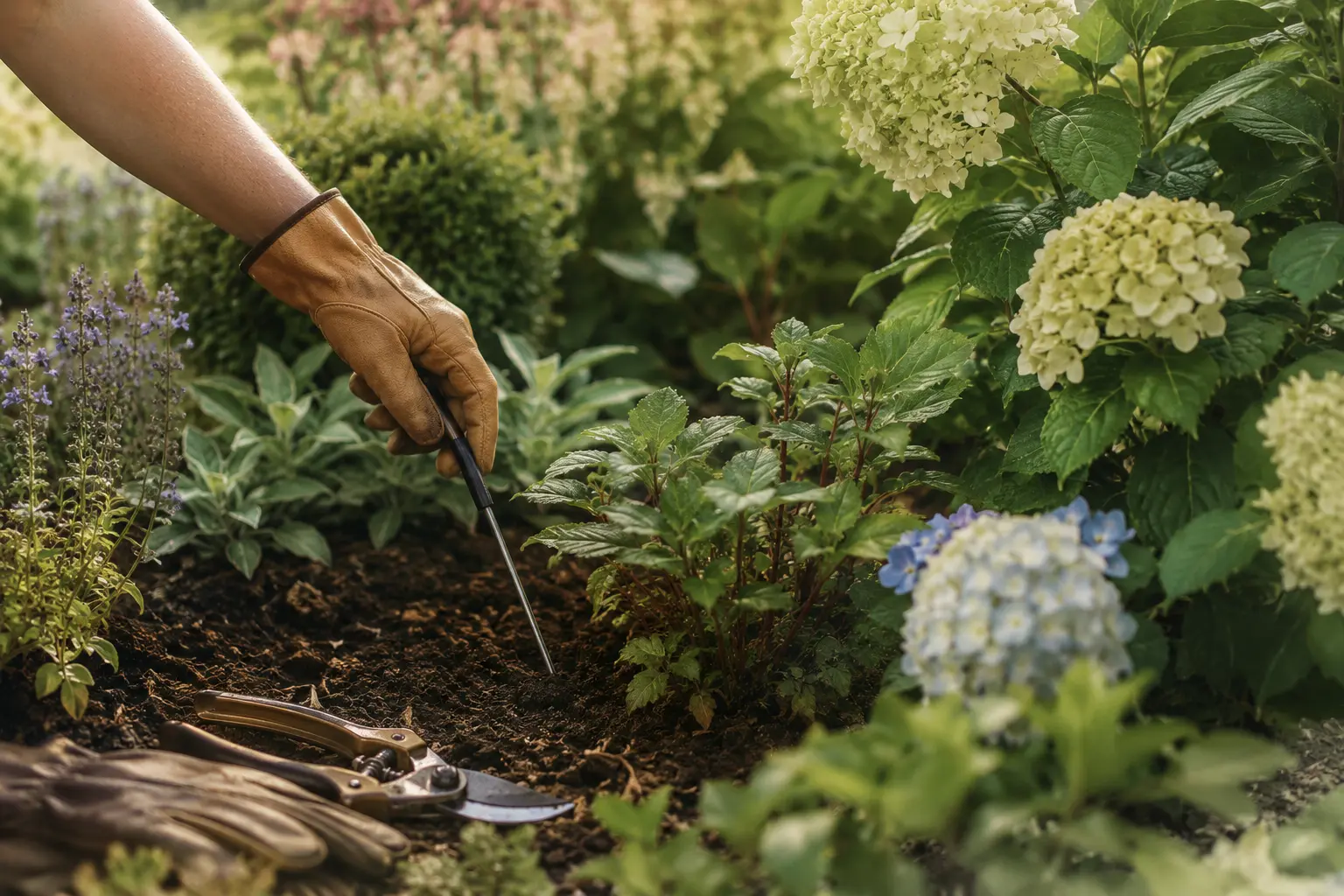
Do not rely on the weather app, the sprinkler schedule or the appearance of the soil surface. Push a finger or small trowel several inches into the root zone.

If the soil is dry, water slowly and deeply in the early morning. If it is still moist, wait. Deep, less frequent watering generally encourages stronger roots than a brief daily sprinkle. Newly installed plants and containers will need closer attention than established trees and shrubs.

Pay special attention to plants beneath roof overhangs, beside hot pavement and under dense tree canopies. They may miss much of the rain that reaches the rest of the yard.

2. Adjust irrigation instead of simply running it longer

Watch the system while it is operating. Sprinklers may be watering the driveway, striking leaves repeatedly or missing the root zone entirely. Drip lines can become clogged or displaced.

If water runs off before soaking into clay soil, use shorter watering cycles with time between them. This allows moisture to move into the soil instead of down the sidewalk.

3. Tidy selectively

Deadhead spent flowers where it will encourage a fresh flush or improve appearance. Remove broken stems, diseased foliage and fully brown perennial leaves. Light grooming can make a tired garden feel cared for without placing more demands on the plants.

Avoid major pruning of healthy trees and shrubs in late summer. Cutting them back can trigger tender new growth that may not harden before cold weather. Save structural pruning for the correct season for that particular plant.

4. Stay ahead of weeds

Weeds compete with garden plants for water and nutrients, and many are preparing to set seed. Pull them after rain, when the soil is softer and roots release more easily. Remove the entire root where possible.

In planted beds, hand removal is often the safest approach. If a weed-control product is used, follow the label exactly and protect desirable plants from drift or overspray.

5. Scout for pests and disease

Look closely at both sides of leaves and along stems. Catching a problem early may allow you to remove a few affected leaves, wash off soft-bodied insects or correct a moisture issue before stronger treatment is needed.

Not every damaged leaf requires spraying. Heat scorch, inconsistent watering, fungal leaf spot and insect feeding can look similar from a distance. Start with identification, then use the least disruptive effective solution.

6. Refresh mulch carefully

Mulch helps conserve moisture, reduce weeds and moderate soil temperature. Keep it in a broad, even layer, but do not pile it against trunks, stems or perennial crowns. If the existing mulch is compacted, loosen it before adding more. More is not always better.

7. Be conservative with fertilizer

A stressed plant is not necessarily a hungry plant. Fertilizer cannot correct poor drainage, damaged roots, insufficient light or drought stress—and it can push new growth at the wrong time.

Targeted amendments may still be appropriate for particular plants, but avoid blanket feeding simply because the garden looks tired. Diagnose first.

8. Make notes for fall

August is one of the best months to observe the garden honestly. Notice where plants are overcrowded, which areas stay wet, where afternoon sun is harsher than expected and where the landscape lacks structure after spring blooms fade.

Take photos and start a fall list. You do not need to fix everything during the hottest part of the year.


The most helpful August routine is simple: check moisture, remove competition, address problems early and avoid creating tender new growth. A little thoughtful care now gives the garden a much better start when cooler weather arrives.


Need help keeping a varied landscape healthy and tidy? Nature by Design ATL offers customized garden stewardship throughout Metro Atlanta, including seasonal care, plant health observation and thoughtful adjustments as the garden grows.

Comments


Home, garden, and gifting—thoughtfully selected for every season.
Our full winter collection — continually refreshed with new finds.

Custom Landscape Design, Mindful Installation & Garden Stewardship

Atlanta • Decatur • Stockbridge • McDonough • South Metro

woodland path

A finished landscape for the way you live.

Nature by Design ATL creates custom landscape designs, plant-focused installations, and seasonal garden care for Georgia homes in Atlanta • Decatur • Stockbridge • McDonough • South Metro. From builder-basic beds to established landscapes ready for a refresh, we design outdoor spaces with curb appeal, seasonal beauty, and long-term plant health in mind.

Atlanta • Decatur • Stockbridge • McDonough • South Metro

Nature by Design ATL

5 star reviews landscape design, landscape maintenance, florist
support local floral design, weddings, events, residential, commercial

Licensed by the state of Georgia and fully insured. We are a family-owned and operated business committed to supporting the local community.

bottom of page