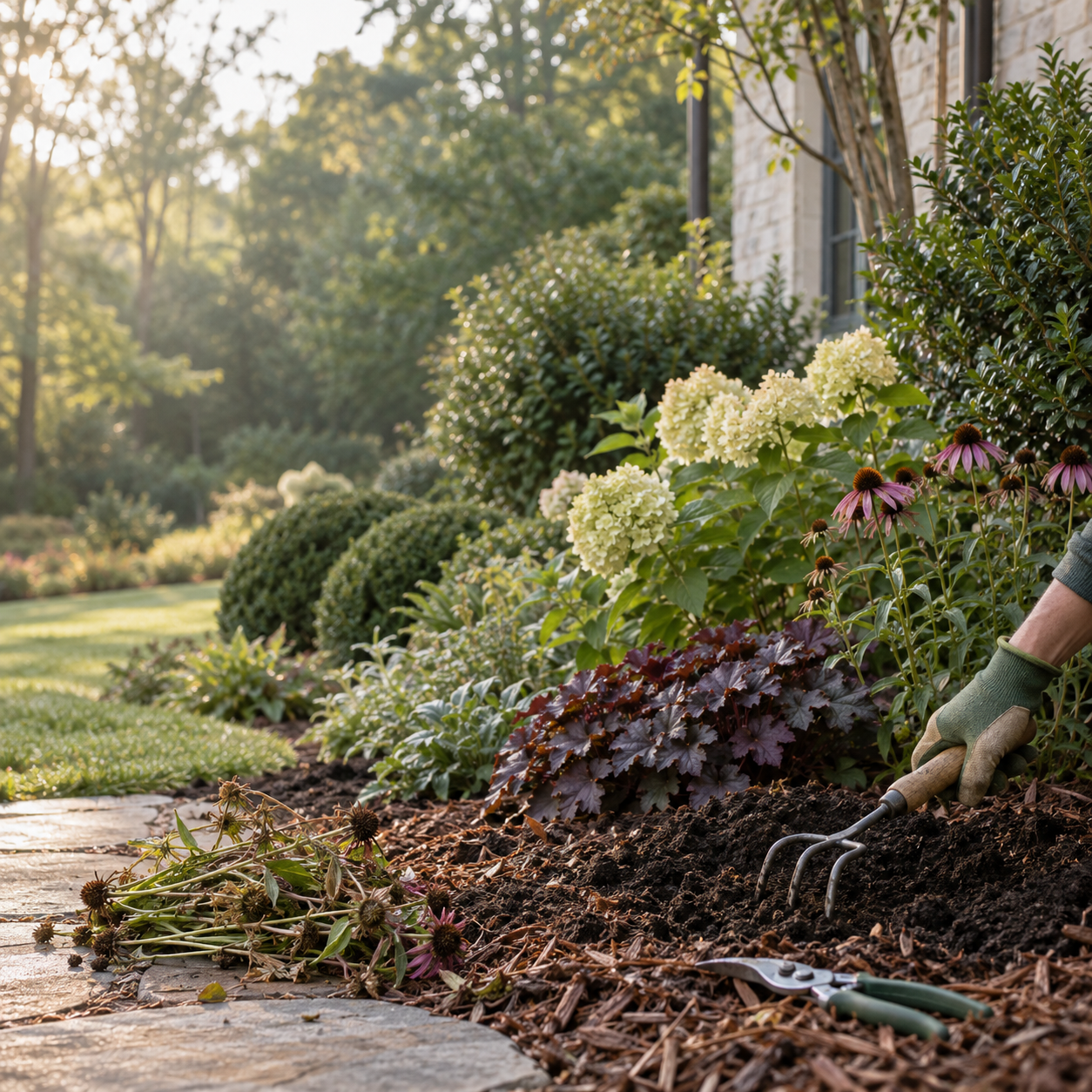
September is the bridge between summer stress and fall renewal. Here is what to plant, divide, refresh, and watch in a Zone 8 Georgia garden this month.
September rarely arrives in Georgia wearing a sweater. The afternoons may still feel like summer, but cooler nights and shorter days are quietly opening the door to our best gardening season.
This is the month to tidy with restraint, make room for cool-season color, and begin the work that will pay off through fall and next spring. The goal is not to do everything in one weekend. Start with the tasks your garden is ready for, then let the weather guide the rest.
1. Check moisture before changing the schedule
Do not shut down summer watering simply because the calendar says September. Check the soil several inches into the root zone, especially around newer trees, shrubs, perennials, and containers. Water deeply when the soil is dry, then allow it to breathe between waterings.
Watch irrigation while it runs. Correct overspray, clogged heads, runoff, and areas that remain soggy. A thoughtful adjustment now can prevent both drought stress and fall fungal problems.
2. Refresh seasonal color gradually
Remove annuals that are finished, but keep healthy summer flowers that are still performing. As nights cool, begin adding pansies, violas, mums, and other cool-season color where the soil is ready.
Refresh containers with new potting mix where needed, confirm that drainage holes are open, and choose plants that suit the actual sun exposure rather than the exposure you wish the porch had.
3. Divide and reposition crowded perennials
Once the strongest heat breaks, September is a useful time to divide crowded hostas, coneflowers, daylilies, and other established perennials. Replant divisions promptly, water them in well, and keep them evenly moist while roots settle.
If a plant struggled all summer, first decide whether the problem was crowding, light, moisture, or poor drainage. Moving it without correcting the real issue simply moves the problem.
4. Prepare for fall planting
Walk the garden and mark where you need shade, screening, year-round structure, or a stronger focal point. Fall is an excellent time for trees and shrubs in Georgia because roots can establish while the air is cooler.
Remove aggressive weeds, loosen compacted soil across the planting area, and improve drainage before new plants arrive. Avoid piling rich amendments into a small planting hole; prepare the surrounding soil so roots are encouraged to move outward.
5. Plan spring bulbs
Choose daffodils, alliums, and other spring-flowering bulbs now while selections are good. Plant as the soil cools according to the needs of each bulb. Tulips generally perform best in Georgia when they are pre-chilled and planted later in fall.
6. Keep scouting—not overcorrecting
Continue checking leaves and stems for pests, disease, and heat damage. Remove clearly diseased material and clean up fallen debris where it could harbor problems, but do not strip the garden bare.
Avoid heavy fertilizer on plants that are still stressed. First correct water, drainage, planting depth, and root-zone problems; then feed only when the plant is healthy enough to use it.
A gentle September rhythm
- Check soil moisture before watering
- Pull weeds before they set seed
- Replace only the annuals that are truly finished
- Divide crowded perennials after the heat eases
- Prepare planting areas for trees and shrubs
- Order spring bulbs and plan where they will go
- Keep late flowers available for pollinators
September is a month of transition, not a deadline. A few well-timed tasks now will make the garden easier to manage and more beautiful as the season turns.
Ready for a more thoughtful landscape?
Tell us what your garden needs, and we’ll help you plan the next step.
Request a Consultation