Atlanta Area Gardens Are Stressed Right Now: What to Do — and What Not to Do
- Georgia Meadows

- 15 hours ago
- 3 min read

If your landscape looks a little tired right now, you are not alone.
Late summer in Georgia can be hard on a garden. Heat, humidity, inconsistent rainfall, sudden downpours, and long stretches of stress can leave even well-planted landscapes looking worn out. Hydrangeas may droop, shrubs may yellow, lawns may thin, and plants that seemed happy in spring can suddenly begin to struggle.
The good news is that this does not always mean something has “failed.” Often, it means your landscape is reacting to weather conditions that require a little adjustment and a little patience.
What heat and heavy rain can do to a landscape
Georgia gardens often deal with two problems at once this time of year: too much stress from heat and not enough consistency in moisture.
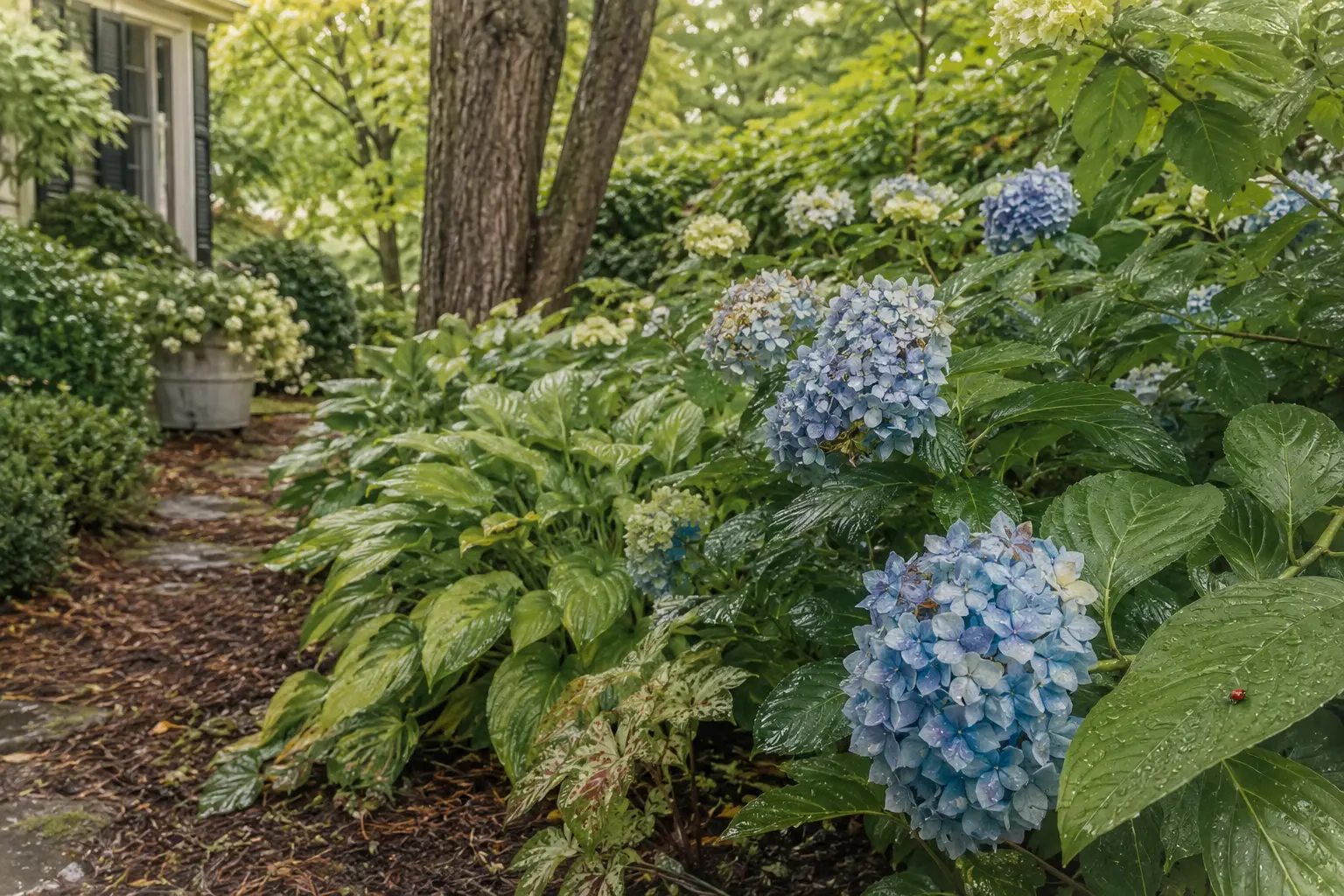
A hard rain may soak the surface and make everything look refreshed, but that does not always mean the root zone received what plants actually need. On the other hand, repeated storms and constant moisture can create the opposite problem, especially in areas with poor drainage or limited airflow.
This time of year, we often see:
wilting even when the soil seems damp
yellowing leaves from stress or overwatering
fungal issues caused by excess moisture on foliage
plant decline in compacted or poorly drained soil
thinning turf and stressed perennials
weeds taking advantage of the weather faster than ornamentals can respond
What to do right now
The best approach is to stay observant and respond thoughtfully rather than reacting too quickly.
1. Check soil moisture before watering
Do not assume your garden needs more water just because plants look stressed in the afternoon heat. Some plants wilt temporarily during the hottest part of the day and recover in the evening.
Before watering, check the soil a few inches down. If it is dry, water deeply. If it is still wet, wait.
2. Water deeply, not constantly
When irrigation is needed, deeper watering is better than frequent shallow watering. Deep watering encourages stronger root growth and helps plants better handle future heat.
3. Watch for drainage issues
If plants stay wet for too long, roots can begin to suffer. Areas where water sits, mulch stays soggy, or leaves never dry out may need attention. Drainage and airflow problems often show up clearly in late summer.
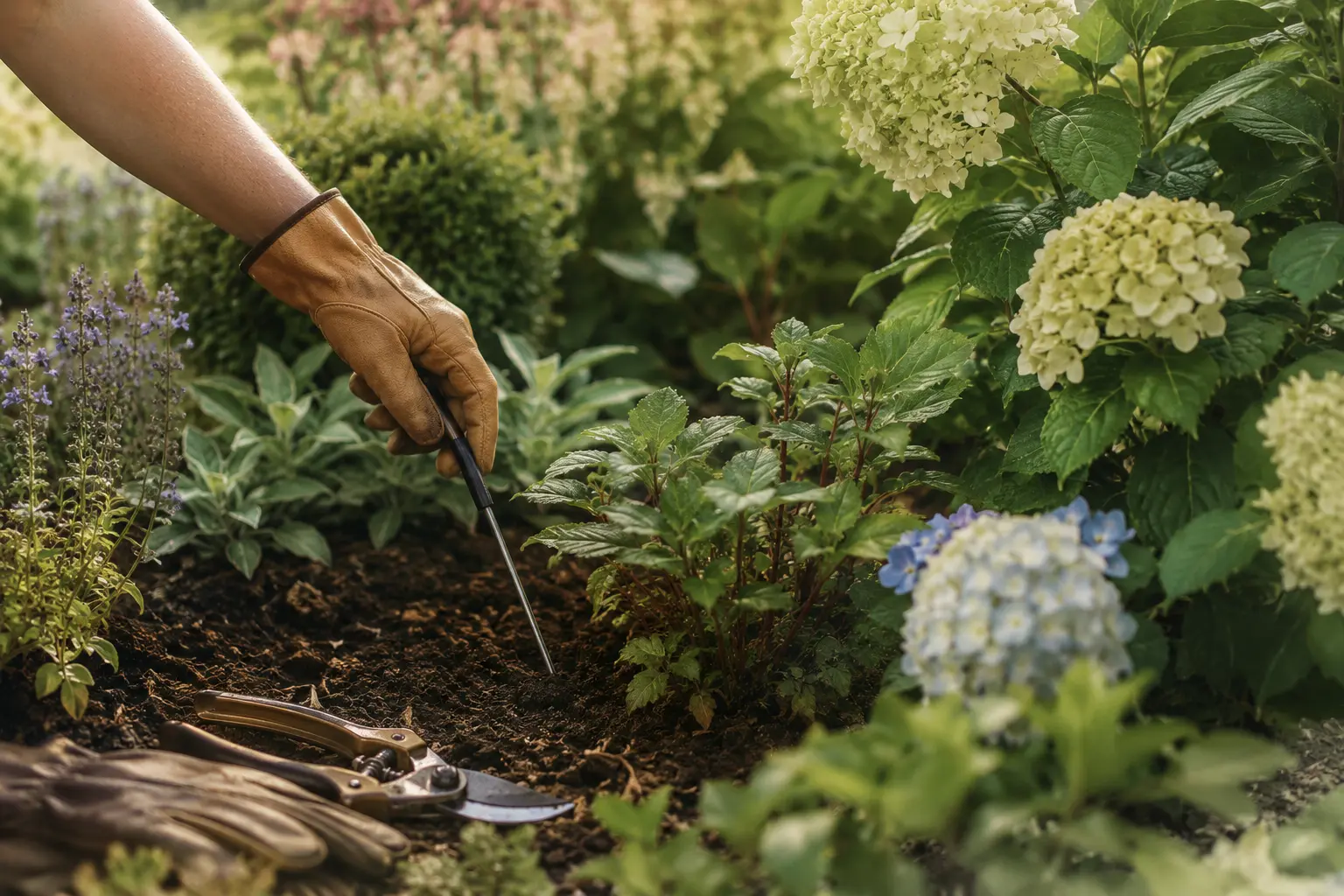
4. Avoid major pruning
Heavy pruning during extreme heat can create additional stress. This is usually not the time to push lots of tender new growth. Focus instead on removing obviously dead, damaged, or diseased material.
5. Refresh mulch if needed
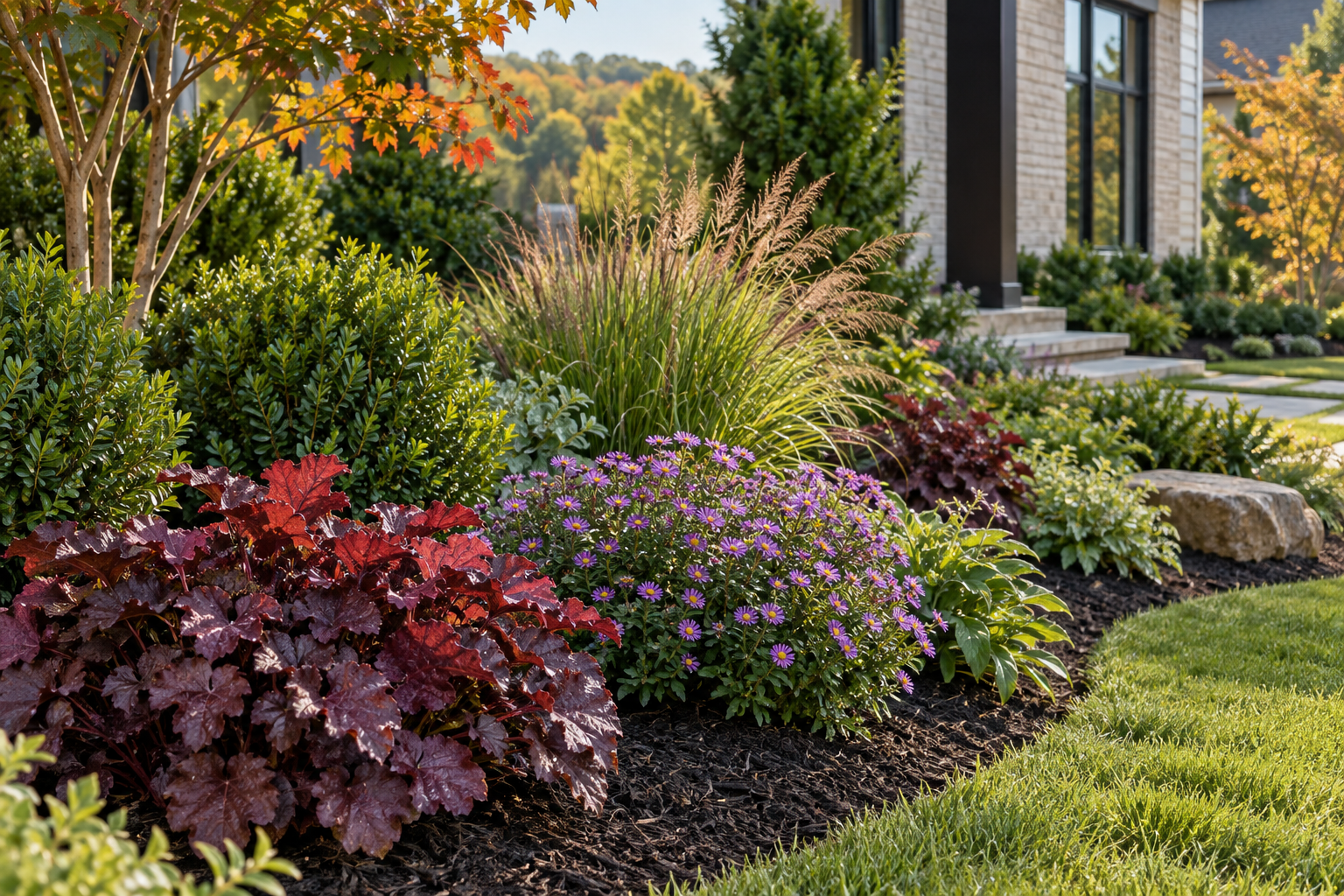
A proper layer of mulch helps regulate soil temperature, reduces moisture loss, and gives the planting bed a cleaner, healthier appearance. Just be sure mulch is not piled against trunks or stems.
6. Keep an eye on newer plantings
Plants installed more recently usually need more attention than established ones. Even healthy new installations can struggle during extended periods of heat if moisture is inconsistent.
What not to do
Sometimes what not to do is just as important.
Try not to:
water by habit instead of checking the soil
assume every wilted plant needs more water
overcorrect with fertilizer during stress
do aggressive pruning in the heat
ignore drainage problems because “it rained a lot”
assume a struggling plant is dead before conditions improve
What summer stress can teach you
One of the most helpful things about this time of year is that it reveals where a landscape needs improvement.
Late summer shows you:
which plants are thriving and which are not
where drainage needs to be addressed
where plant spacing may be too tight
where sun or heat is more intense than expected
where stronger structure, shade, or seasonal interest may be needed
In other words, summer often shows you exactly what should be improved in fall.
Start planning for fall now
If you are noticing plant stress, drainage issues, thin areas, or parts of your landscape that simply are not working the way you hoped, this is a great time to start planning changes.
Fall is one of the best times to improve a landscape in Georgia. Cooler temperatures make installation easier on plants, and it is an ideal season for adding shrubs, perennials, and trees.
Your landscape should welcome you home — and if this summer has revealed areas that need attention, now is the time to start planning.
Thinking ahead to fall improvements?
Contact Nature by Design ATL today to start planning your fall landscape project.


Comments