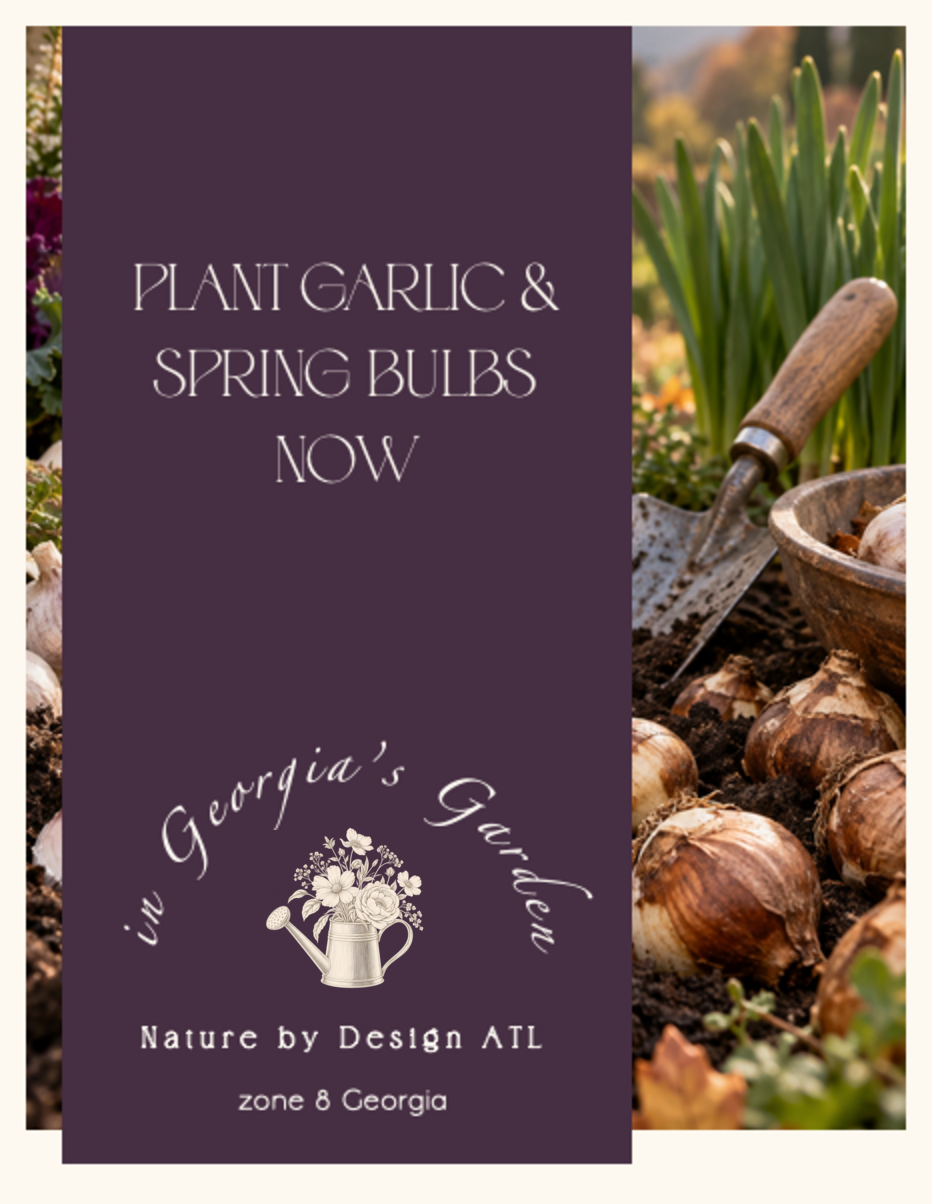
Fall planting gives garlic, daffodils, alliums, and other spring bulbs time to root before their growth appears above the soil.
Some of spring’s best moments begin with a patch of bare fall soil. Garlic and spring-flowering bulbs spend the cooler months developing roots, storing energy, and preparing for growth that will seem almost sudden when the season changes.
In Zone 8 Georgia, September is a good time to choose varieties and prepare the planting area. Garlic planting can begin as the weather settles, while many ornamental bulbs perform best once the soil cools later in fall.
Choose a place that drains
Bulbs need moisture to root, but they do not want to sit in wet soil. Avoid low areas that remain soggy after rain. In heavy Georgia clay, loosen a broad planting area and incorporate finished compost where it will improve structure and drainage.
Most garlic and spring bulbs flower best with generous sun. Daffodils can also work beneath deciduous trees because they receive spring light before the canopy fills in.
Planting garlic
- Separate the bulb into individual cloves shortly before planting
- Keep the papery skin intact
- Place the pointed end up
- Plant cloves about 3 inches deep and 4 to 6 inches apart
- Add a light layer of clean mulch after planting
- Mark the row so it is not disturbed during winter cleanup
Planting daffodils, alliums, and other spring bulbs
A useful general rule is to plant bulbs two to three times as deep as the bulb is tall, but always follow the instructions for the variety. Arrange bulbs in loose groups or drifts rather than narrow, evenly spaced rows for a more natural effect.
Place the pointed end upward when it is obvious. If you cannot tell, set the bulb on its side; the shoot will usually find its way toward the surface.
Tulips need different treatment in Georgia
Tulips generally need more winter chilling than our climate reliably provides. Purchase pre-chilled bulbs or chill them according to the supplier’s directions, keeping them away from ripening fruit. Plant tulips later than daffodils, once the soil is properly cool.
Many gardeners in Georgia treat tulips as annual color. Daffodils and several alliums are usually more dependable for returning in future years.
Plan for the finished garden
Use bulbs to extend an existing planting rather than creating an isolated patch. Tuck early bloomers around perennials that will later hide fading foliage, and repeat small groups to carry color through the bed.
After flowering, leave the foliage until it yellows naturally. Those leaves are rebuilding the bulb for the following year, even when the flowers are gone.
Ready for a more thoughtful landscape?
Tell us what your garden needs, and we’ll help you plan the next step.
Request a Consultation