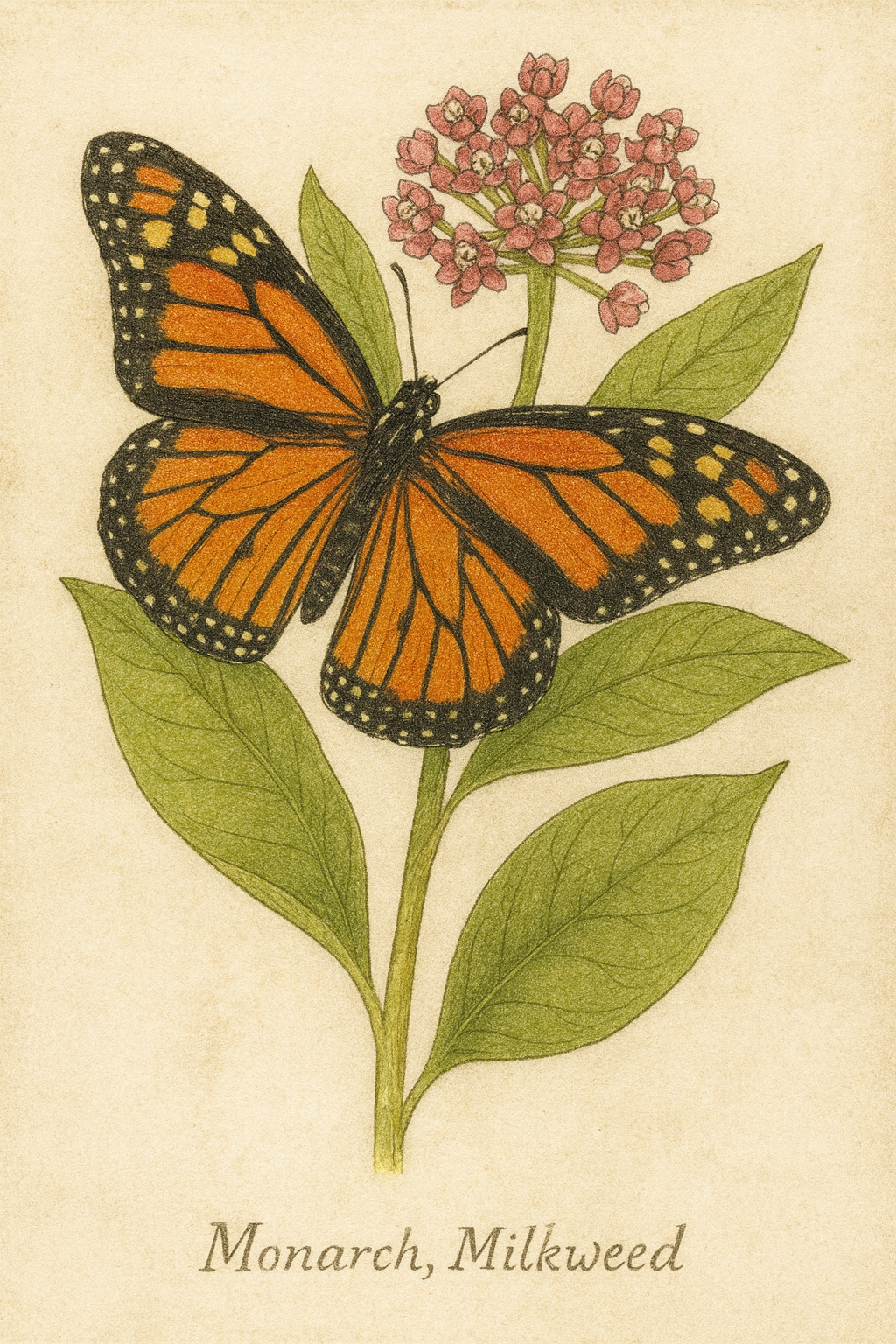
As monarchs drift south through Georgia, late-blooming flowers become small but important nectar stations along an extraordinary journey.
September brings one of the garden’s loveliest reminders that our landscapes are connected to something much larger. Monarch butterflies begin moving south toward Mexico, sometimes traveling thousands of miles on wings that look far too delicate for the task.
A single yard will not carry the migration, but many small gardens together can create a chain of rest and nourishment. The most useful thing we can do now is keep the garden open a little longer.
Leave late blooms standing
Goldenrod, asters, zinnias, sedum, coneflowers, and other late-blooming plants provide nectar when many summer flowers are fading. Deadhead selectively rather than cutting everything back at once.
Group flowers where possible. Larger patches are easier for passing pollinators to find and allow them to feed without spending as much energy moving between isolated blooms.
Know the difference between host and nectar plants
Milkweed is the host plant monarch caterpillars need. Adult monarchs also rely on many nectar-rich flowers for energy. A useful habitat includes both: milkweed for future generations and a succession of blooms from spring through fall.
Choose milkweed species appropriate for Georgia and avoid plants treated with systemic insecticides.
Offer water safely
Butterflies can gather minerals and moisture from damp soil. A shallow dish filled with sand and a little water can create a simple puddling area. Keep the surface damp rather than deep, and clean it regularly.
Use pesticides carefully
Do not spray blooming plants while pollinators are active. First identify the pest and decide whether treatment is truly necessary. Hand removal, pruning a small affected section, or treating a targeted area may solve the problem without exposing the entire garden.
Plant now for next year
Fall is a good time to plan a more continuous sequence of flowers. Look for gaps in early spring, midsummer, and fall bloom, then choose plants suited to your light, drainage, and available space.
Even a small sunny patch or a few well-chosen containers can become part of the route. A garden does not have to be wild or large to be generous.
Ready for a more thoughtful landscape?
Tell us what your garden needs, and we’ll help you plan the next step.
Request a Consultation